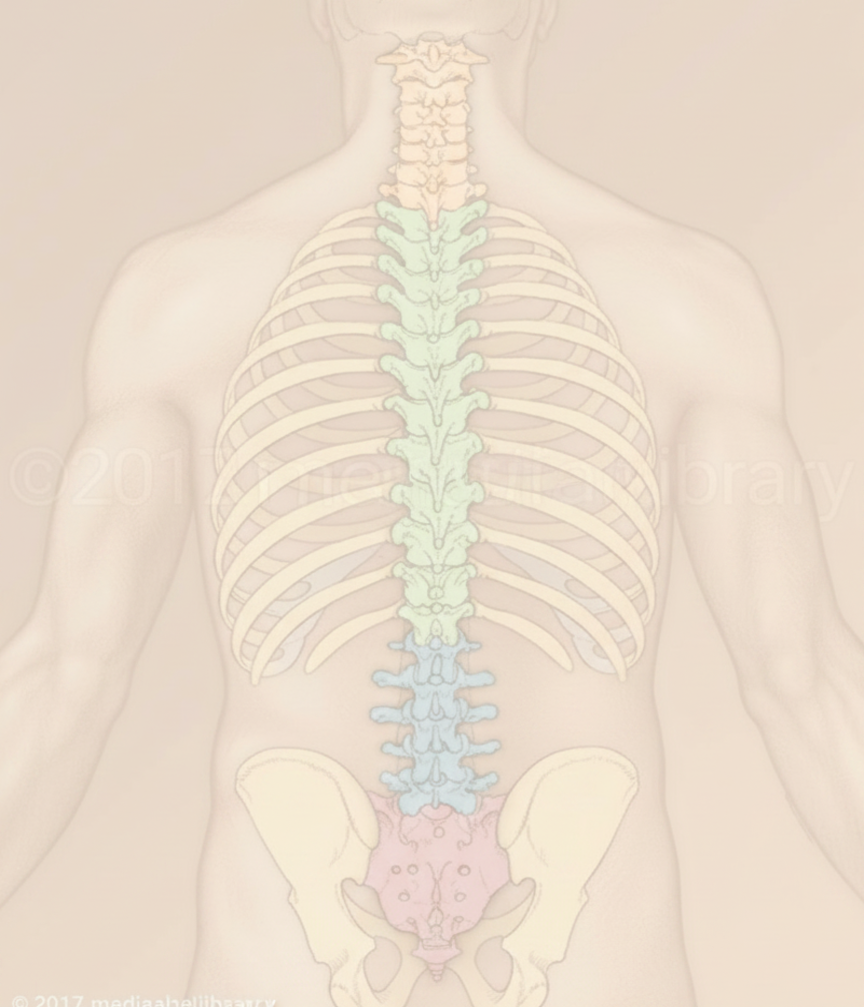
Select a gateway on the spine to explore its role in your healing journey
Spinal Flow Technique is a gentle, in-person modality that works with the spine, nervous
system, and the body's natural ability to heal.
Using light touch at 33 access points from the cranium to the coccyx, Spinal Flow supports
communication between the brain and body, helping the nervous system move out of
overload and into a more regulated, restorative state.
As the body begins to unwind, layers of stored stress may gradually release, creating space
for greater ease, improved function, and long-lasting wellness.
In person only
30-minute and 45-minute sessions available
Spinal Flow Technique is grounded in the understanding that the body functions as an
interconnected whole. The brain, nervous system, spine, posture, organs, muscles, thoughts,
and emotions are all in relationship with one another.
We recognize this connection in everyday life — a lump in the throat, butterflies in the
stomach, tension in the shoulders, or a racing heart. The body is always communicating.
When emotional, physical, or chemical stress is not fully processed, the body may begin to
store that stress in protective patterns. Over time, this can contribute to tension, postural
changes, reduced adaptability in the nervous system, and symptoms that may show up as
pain, dis-ease, or illness.
Through gentle touch of the access points along the spine, Spinal Flow supports
communication between the body and brain and helps the nervous system settle into a more
regulated and restorative state.
As the nervous system begins to unwind, layers of stored stress may gradually release,
supporting greater ease, balance, and wellbeing.
Spinal Flow works through the nervous system, the spine, and 33 access points from the
cranium to the coccyx. The nervous system controls and coordinates every function in the
body, influencing how we move, rest, digest, respond to stress, and heal.
The brain and spinal cord are surrounded by a protective membrane called the dura mater,
which helps support communication between the brain and body. Through gentle touch,
Spinal Flow sends a message through the spinal cord and nervous system, inviting the body
into greater connection, regulation, and flow.
Rather than forcing change, Spinal Flow supports the body in shifting into a state more
supportive of healing. As the nervous system unwinds, stored stress may begin to release,
allowing for greater ease, improved function, and a deeper sense of vitality.
From Dr. Carli Axford’s perspective, when I work with your dura mater and communicate with
your nervous system, your brain responds by creating more flow. That experience stays in
your system because it’s your brain adapting to create greater ease and movement, which
can be long-lasting. The longevity of these changes comes from the nervous system learning
to maintain this improved flow as its new default state; with gentle, regular tuning, the
pathways that support regulation are reinforced, so stress responses may fade more quickly
and daily life can feel more resilient over time. For example, after something like whiplash,
instead of your neck and spine reacting with rigidity from a sudden jolt, your body already has
more ease and flow available, helping your system respond with greater resilience and less
restriction. I carefully monitor and track the flow from one vertebra to the next—through the
cranium to the coccyx—to identify areas where flow may be decreased and to gently support
your nervous system in releasing those layers of tension. As flow improves, both the structure
and function of your spine can change, supporting your body’s natural ability to heal, adapt,
and move with greater ease. ✨
If you’d like to know more about the Spinal Flow Technique, contact
Oceana (Oceana (Brenda-Lee)) at
780-843-6727 or soulflarerenewal@gmail.com.
Spinal Flow works with the understanding that the body is always moving toward healing
when given the right conditions. The nervous system helps coordinate every function in the
body, and when communication through this system is under strain, pain, dis-ease, illness,
tension, and fatigue may begin to surface.
Spinal Flow supports the body in moving from blocked flow toward a more regulated,
restorative state. Rather than focusing only on what feels wrong, this work also listens for
where ease, softness, breath, and flow are already present.
By working with these areas of ease, the body can begin to expand what is already working
well. Over time, this may help release stored stress patterns and support greater comfort,
connection, and wellness.
Spinal Flow honours the body as intelligent, adaptive, and always seeking a pathway back to
balance.
The body is designed to respond intelligently to stress. When a threat is perceived, the
nervous system shifts out of its rest, digest, and heal state and into a protective response
often known as fight, flight, or freeze.
This response is helpful in the short term, but the body is not designed to stay there for long.
When emotional, physical, or chemical stress becomes ongoing — or when the body does not
fully discharge what it has experienced — those patterns may remain stored in the nervous
system and body over time.
In modern life, stress can build through work, relationships, financial strain, injury,
overstimulation, or unresolved emotional experiences. As this happens, the body adapts.
These adaptations may show up as tension, postural changes, nervous system overwhelm, or
symptoms felt physically, emotionally, and functionally.
Rather than viewing symptoms as separate problems, Spinal Flow looks at how they may be
connected through the spine, nervous system, and the body’s accumulated stress patterns.
Spinal Flow honours these responses as intelligent, protective patterns — not signs that the
body is broken.
Spinal Flow recognizes three broad categories of stress that may affect the body over
time: physical, chemical, and emotional.
Physical stress may come from accidents, injuries, repetitive movement, prolonged sitting,
poor posture, sleep habits, pregnancy, childbirth, or the physical demands of daily life.
Chemical stress may come from medications, alcohol, smoking, vaping, food additives,
environmental exposures, and household or personal care products the body is continually
asked to process. The goal is not fear, but awareness of the cumulative load the body may be
carrying.
Emotional stress may come from trauma, grief, relationship challenges, pressure, fear,
overwhelm, unresolved experiences, or long-standing patterns held within the nervous
system. Sometimes these experiences are obvious, and sometimes they are subtle. The body
does not compare stress by size — it responds to what feels overwhelming, unresolved, or
unsafe.
When these layers build over time, the body may begin to compensate in ways that affect the
spine, posture, nervous system, and overall function.
The body is deeply intelligent and will often hold these patterns until there is enough safety
and support for them to begin unwinding. Spinal Flow works gently with the nervous system to
support this process, helping the body reconnect, regulate, and release in its own timing.
Spinal Flow views the spine through seven key gateways, each connected with different
areas of the body, nervous system function, and common symptom patterns. These gateways
offer a practical framework for understanding how stress may be expressed physically,
emotionally, and functionally within the body.
When there is greater movement, communication, and adaptability through the gateways, the
body is better able to support regulation, healing, and restorative flow. Rather than simply
fighting symptoms, the gateways invite us to listen more deeply to what the body is
communicating.
